From Prototypes to Products – Lessons in “Near-Final” Prototyping
1. Introduction – Why Prototypes Matter More Than Ever
In today’s agile world, the prototype isn’t just a mock-up—it’s often the first version of the product that stakeholders and users truly experience. Yet, many teams still treat prototyping as a disposable activity: low-fidelity sketches for internal brainstorming or bare-bones wireframes for basic usability testing. This underestimates the tool's profound power. The strategic use of ‘near-final’ prototypes—high-fidelity, interactive models that closely mimic the end product—is one of the most effective ways to de-risk projects, align cross-functional partners, and accelerate critical product decisions.
2. The Gap Between Prototypes and Products
The traditional mindset draws a hard line: prototypes are rough, conceptual, and temporary, while products are polished, functional, and real. This is a dangerous dichotomy. The reality is that a prototype that looks and behaves in a near-final state can bridge the comprehension gap that often derails projects. It can convincingly demonstrate value to stakeholders, validate complex user assumptions before a single line of code is written, and inspire engineering teams by providing a tangible, interactive target.
Early in my career at Ideafarms, we embraced this philosophy. Our prototypes were so detailed and realistic they could “pass as final products” in client presentations. This didn’t just showcase our vision; it built immediate trust and bought us the credibility to guide the project with authority.
3. Lessons Learned in Near-Final Prototyping
This approach yields several critical lessons:
- Lesson 1: Fidelity Drives Belief. Stakeholders, especially non-technical executives, invest emotionally and financially when they can see and feel the product. A wireframe is an abstraction; a near-final prototype is a destination. I’ve seen clients who were hesitant about a roadmap become fervent supporters after interacting with a prototype that made the value proposition tangible.
- Lesson 2: Prototype the Experience, Not Just the Interface. The magic of a product often lies in its transitions, micro-interactions, and flow. Near-final prototyping allows you to simulate the entire experience. At PayPal, we created motion-rich prototypes for the Airtime app that demonstrated how subtle animations could reduce cognitive load and guide user attention. This was a lesson we could never have communicated with static screens alone.
- Lesson 3: Prototypes as Decision Accelerators. A believable prototype shifts team conversations from abstract “what if” debates to concrete “how do we” discussions. Engineers can assess technical feasibility more accurately, and product managers can gauge market fit with greater confidence. This dramatically reduces cycles of feedback and accelerates commitment.
- Lesson 4: Near-Final ≠ Expensive. A common objection is the perceived cost of high fidelity. However, modern tools like Figma, Framer, and ProtoPie have democratized interactivity. The key is strategic: invest in near-final fidelity only when the decision at hand justifies it, such as validating a core user flow or securing executive sign-off.
4. Benefits of Near-Final Prototyping
The advantages are measurable across the organization:
- Stakeholder Alignment: Achieve faster, more confident buy-in by making the vision irrefutable.
- Accurate User Validation: Users interact with a near-final prototype more naturally, providing feedback on the actual experience, not just the concept.
- Engineering Efficiency: By clarifying complex interactions upfront, you reduce ambiguity and costly rework during development. At Amazon, we used detailed prototypes to simulate vendor workflow tools, which helped engineers understand nuanced interactions and significantly reduced SLA investigation times.
- Business Agility: Accelerates roadmap decisions by replacing speculation with evidence, reducing market uncertainty.
5. Pitfalls to Avoid
This approach requires discipline to avoid common traps:
- Don’t confuse polish for readiness. Clearly set expectations that the prototype is a facade, not a coded product.
- Avoid over-investing in detail too early. Match the fidelity to the stage of the project; save near-final work for key validation milestones.
- Remember scalability. A prototype is a simulation, not a substitute for robust systems design and architecture.
6. A Practical Framework for Teams
Leaders can implement a simple decision guide to ensure the right tool for the job:
- Low Fidelity: Best for problem framing, early ideation, and brainstorming. Think whiteboard sketches and sticky notes.
- Medium Fidelity: Ideal for testing user flows, information architecture, and early usability. Think grayscale wireframes in a clickable flow.
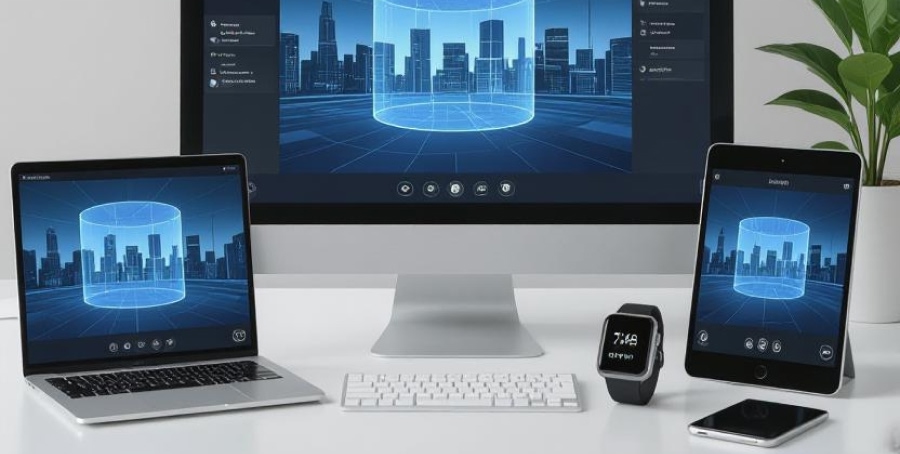
- Near-Final Fidelity: Reserved for stakeholder alignment, product-market validation, and testing motion and complex interactions. Think a fully branded, interactive simulation.
Visualize this as a matrix where the level of fidelity increases with the cost of a wrong decision.
7. Leadership Takeaway – Prototypes as Strategy
For UX leaders, promoting near-final prototyping is not just about improving design output; it’s a strategic lever for organizational communication. It is our responsibility to create a culture where compelling prototypes are the primary engine for decision-making, bridging the gap between vision and execution. As I often tell my teams, “A great prototype is the cheapest version of your product you’ll ever build — and often the most valuable.”
8. Conclusion – From Prototypes to Products
By blurring the line between prototype and product, we build trust, accelerate delivery, and de-risk innovation. This approach transforms the design artifact from a suggestion into a conviction. When prototypes feel like products, the final products themselves arrive faster, better, and with the confidence that comes from having been experienced long before they were ever built.